

As I mentioned in my previous post, PCF will be embarking on two series this spring all about Beowulf and The Lord of the Rings, respectively. Today, we will be setting some context for reading Beowulf. This post is a revised version of a piece first published on January 10, 2024.
Which Edition/Translation?
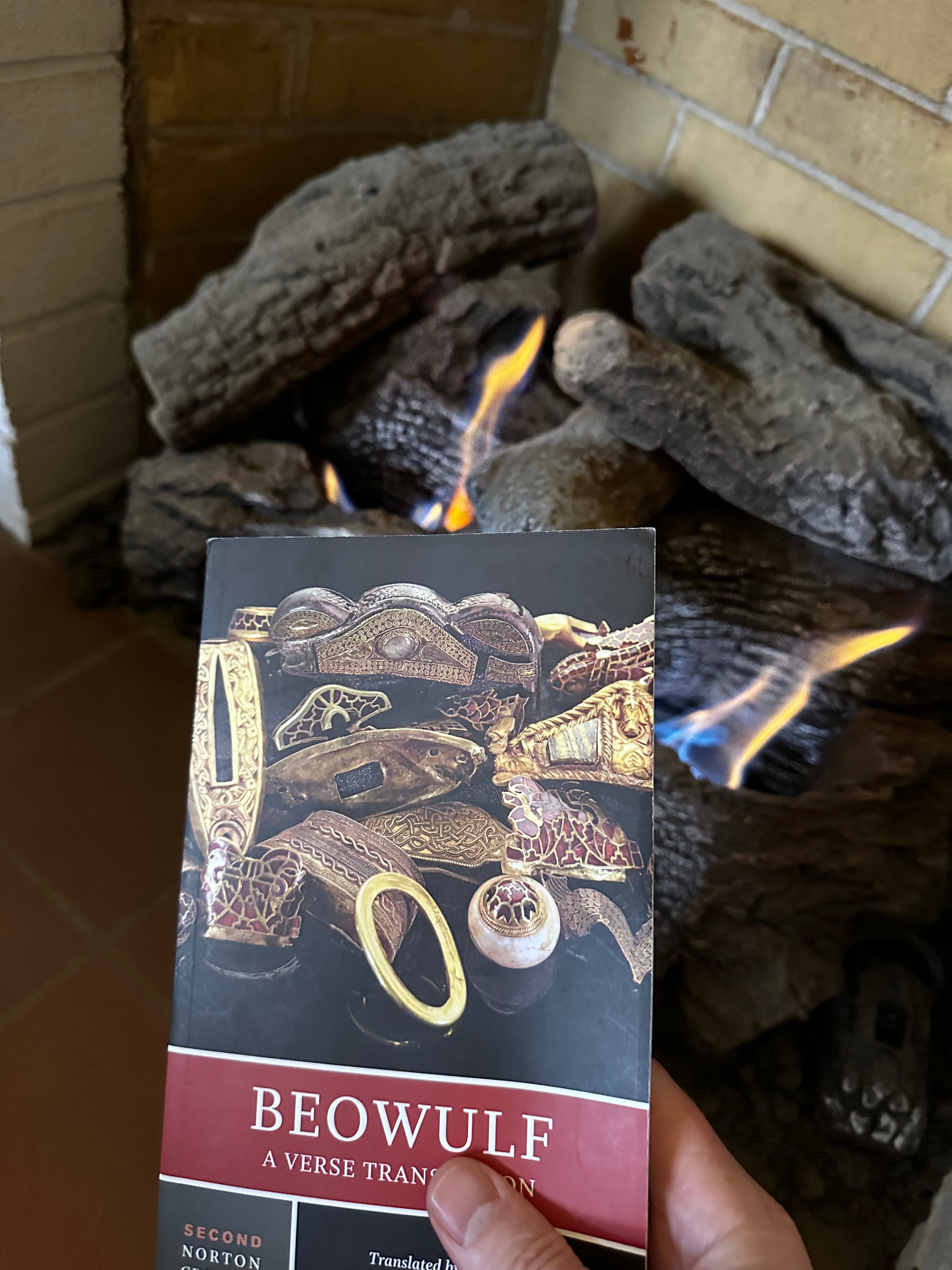
I recommend the Norton Critical Edition of Seamus Heaney’s translation of the poem, edited by Daniel Donoghue. I think that, more than any other translation that I have read, Heaney succeeds in creating a work of art in its own right, and the Norton Critical Edition includes Tolkien’s essay, “Beowulf: The Monsters and the Critics,” which we will be discussing, along with lots of good supplementary material. But any version of the Heaney translation will do.
I will be referring to other translations during the series and comparing them to Heaney, as well as to the original Old English. If (and only if) you want an edition of the original Old English, then I recommend the fourth edition of Klaeber, edited by R.D. Fulk, Robert E. Bjork, and John D. Niles. Don’t expect to be able to read the Old English; it is like a foreign language to modern English speakers, and it requires fairly intense study to learn it. This edition has a full glossary and full scholarly apparatus
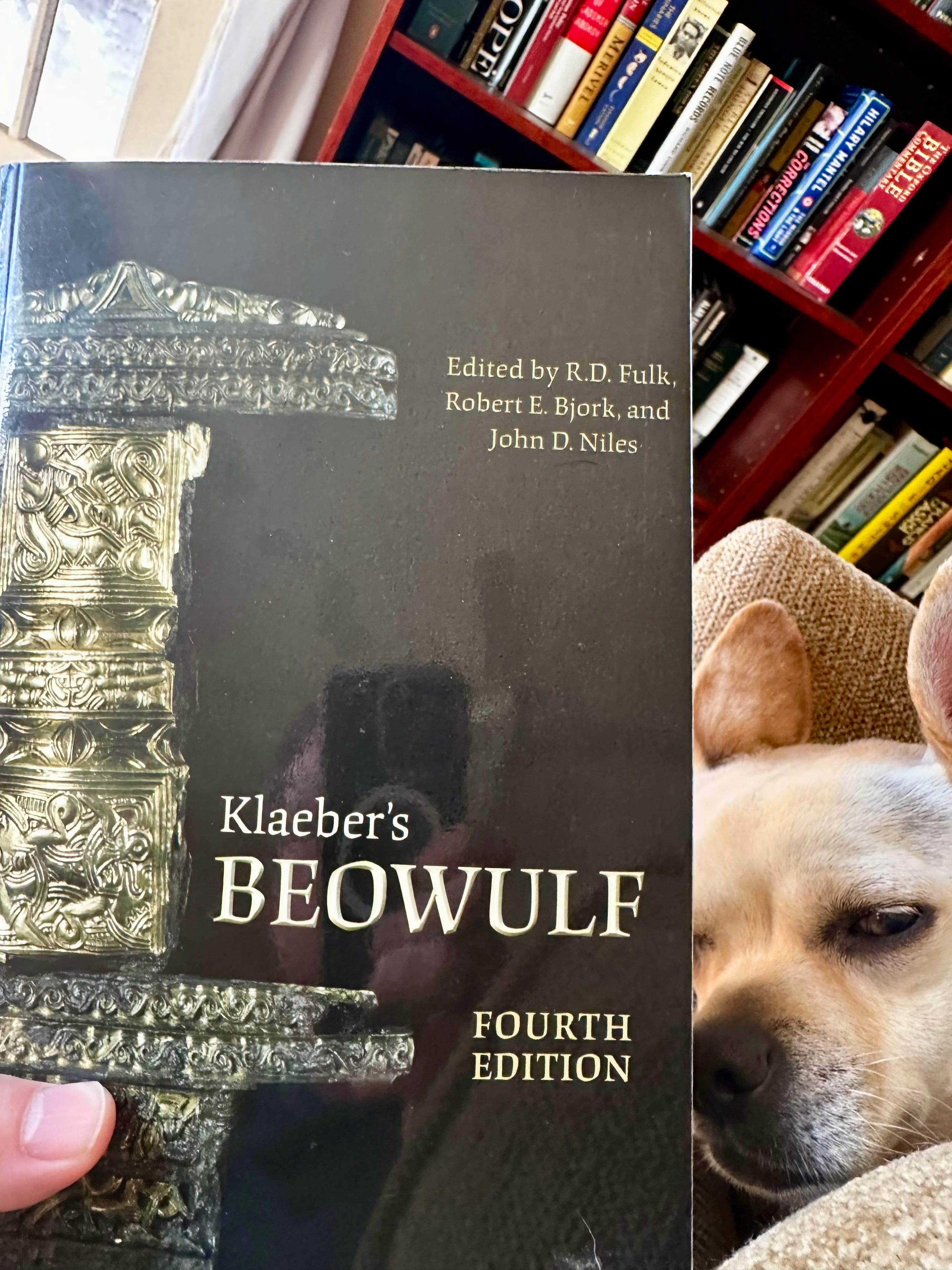
.
And if you are just along for the ride and don’t plan on reading the poem, then that’s fine: the essays should be accessible to you whether or not you are following along with the text.
Embracing the Unknown
If you are reading the poem for the first time (or even for the fifth time), you should be prepared for some amount of confusion. This is because the poem was not written for twenty-first-century readers. The poet, from the very first lines, assumes that we know some things that we do not know. He says that “we have heard” of these so-called “Spear-Danes” and all of the great things that they have done. Well, we haven’t.
The “we” is not us.
And this is the first challenge as we read this poem: we will have a lot of unfamiliar names thrown at us, and we will find very few reference points as modern readers. But if the poem was not written for us, then it is our job to imagine an original audience, to work out what their values were, to try to empathize with them to the extent that might be possible. We must embrace the unknown and allow our imaginations to fill in the gaps.
(This, by the way, is one of the most difficult aspects of teaching this poem to college students, especially those who aren’t English majors: some of them are extremely resistant to difficulty. They want to be able to understand things clearly and don’t like it when something is unknowable. They want to know what will be on the exam. See my piece on “Negative Capability in a Culture of Mastery” for more about this attitude. Well, since there will be no exams here, you won’t have to worry about that. Find your negative capability. No need for mastery.)
That said, the poem quickly introduces us to some dynamic figures: Shield Sheafson (Scyld Scefing in the original), Hrothgar, and—terrifyingly—Grendel. After a little while, we will meet Beowulf himself. These dynamic figures are your reference points, and they will carry you through the poem. We will discuss how they relate to this tapestry of background material, which we have only in fragments.
The poem also introduces us to a remarkable place: Heorot, Hrothgar’s hall. And as soon as we hear of its building, we are told that “The hall towered, / its gables wide and high and awaiting / a barbarous burning.” The fate of the hall is stitched into the account of its building. It will burn.
This is an example of how the poem’s narrative works: we jump forward in time, and we loop back, sometimes in the same sentence. (Klaeber, the editor of the standard edition, famously referred to the poem’s “lack of steady advance” in his original introduction in the 1920s.)
Don’t be thrown by this: time in the poem works differently from what we are used to. We will discuss some possible reasons for this narrative structuring, as well how it affects our reading.
I’ll be back soon with a fuller introduction to the poem. Meanwhile, start reading!
And be afraid. The mearcstapa is coming.
Thanks for reading, from my fancy internet microphone to yours.


