
Charades
*Emma* Reading Challenge bonus, week two

Welcome to our chapter-by-chapter discussion of Emma for premium subscribers. This week we take on the second half of Volume one. I spend more space here on the earlier chapters, since I focused on the latter part in Wednesday's post (which you can find here).
Volume one, Chapter 9
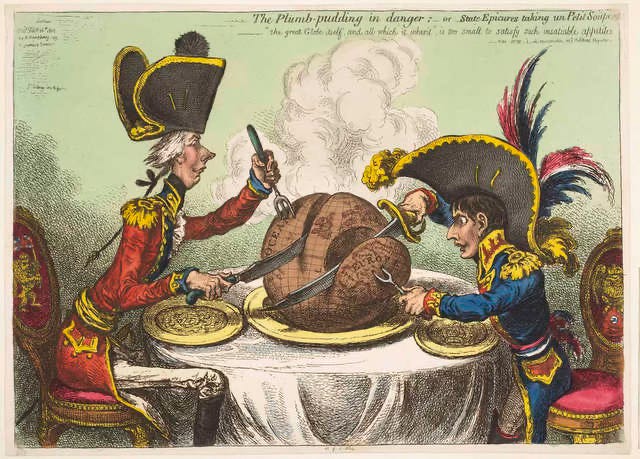
The first appearance of the word charade listed in the Oxford English Dictionary is from a letter written in 1776, which asks for the recipient to send some "charrades" [sic.] and indicates that they are riddles of some type. The word is derived from French, but the meaning developed along a similar timeline in both languages. Our modern game of charades, which consists of riddles acted out in silence, developed just a few years later. The Duke of Wellington and Napoleon both played charades, according to Shannon Selin.
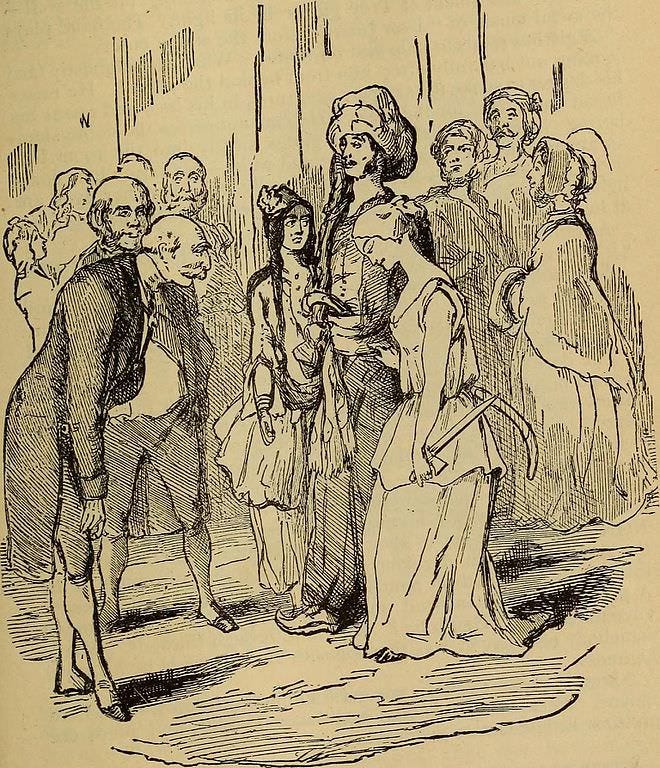
The charade is the perfect metaphor for Emma's series of misreadings throughout this novel, because she is clever enough to understand their meanings but not an experienced enough judge of character to derive their motivations and intentions. She can easily solve Mr. Elton's charade (oh, excuse me: Mr. Elton's friend's charade) but misreads its object. Harriet, on the other hand, can discern neither meaning nor intention and judges its quality according to its length.
The reader, like Emma, is moved to laughter at the end of the chapter, as Mr. Elton declares that if his "friend" (the fictional author of the riddle) shared his sentiments, "he would consider it [the honoring of his charade] as the proudest moment of his life" (61). But of course, unlike Emma, the reader is likely to have discerned Elton's intention as well as his meaning by this point.
Volume one, Chapter 10
The reader learns more about Emma in this chapter through Harriet's inquiry as to why she is not married. We have already observed the relatively slim pickings in the obscure village of Highbury, as well as the anti-marital sentiments of Mr. Woodhouse, but Harriet understands none of this. Emma's response is fascinating, as she casts her confinement and her obligations to her father as a kind of freedom and ideal existence:
I have none of the usual inducements of women to marry. Were I to fall in love, indeed, it would be a different thing! But I never have been in love; it is not my way, or my nature; and I do not think I ever shall. And, without love, I am sure I should be a fool to change such a situation as mine. Fortune I do not want; employment I do not want; consequence I do not want: I believe few married women are half as much mistress of their husband's house, as I am of Hartfield; and never, never could I expect to be so truly beloved and important; so always first and always right in any man's eyes as I am in my father's. (62)
There is simply too much to say about this passage. I must either write an extended essay or leave it to the comments, so I'll do the latter. What is your take?
One other note about this chapter: Emma's visiting the poor of her parish seems an entirely sincere endeavor, and the narrative voice is free of irony in relation to it. This seems to be another signal to the reader of Emma's good heart, despite her flaws.
Volume one, Chapter 11
Isabella, Emma's sister, and her husband, Mr. John Knightley, arrive at Hartfield for a Christmas visit, which allows Mr. Woodhouse once again to express his sympathy for "poor Miss Taylor." Frank Churchill and his persistent absence, despite his father's wedding celebrations, becomes the subject of conversation. Mr. Woodhouse says, however, that Frank wrote "a very proper, handsome" letter to congratulate his new stepmother, though he cannot remember the contents of it (70).
Volume one, Chapter 12
Mr. Knightley joins them for dinner, and the narrator describes his meeting with his brother in an oddly patriotic manner:
"How d'ye do, George?" and "John, how are you?" succeeded in the true English style, burying under a calmness that seemed all but indifference, the real attachment which would have led either of them, if requisite, to do every thing for the good of the other. (72)
There are few reminders in this novel that Wellington had defeated Napoleon the year before its publication. Indeed, England had been at war with France for most of Jane Austen's adult life, and two of her brothers were naval officers. There are a couple of shots taken at the French in the course of the novel (which I will point out) as well as praise of English virtue, as we see here.
Some readers complain that Austen does not write specifically about the great historical events of her time. (By the way, does anyone ever complain that, say, John Irving doesn't write about, say, the Cuban Missile Crisis?) We might remind these readers of Catherine Morland's immortal words about history in Northanger Abbey:
I read it a little as a duty, but it tells me nothing that does not either vex or weary me. The quarrels of popes and kings, with wars or pestilences, in every page; the men all so good for nothing, and hardly any women at all—it is very tiresome.
Austen is fulfilling the potential of the novel expressed by her older contemporary Madame de Staël, who claimed that it was a literary form that could elevate and express the lives and feelings of the kind of people ignored by the grand historical narratives—which is to say, most people, and especially women. (For more on Madame de Staël, see this post from last year.)
This chapter also includes Knightley's and Emma's reconciliation after their disagreement regarding Mr. Martin's proposal to Harriet.
Volume one, Chapter 13
I covered this chapter in Wednesday's post. It includes the preparations for Christmas Eve and the carriage ride to the Westons' house.
Volume one, Chapter 14
The Christmas-Eve gathering at the Westons' commences, and as Emma becomes more aware of Mr. Elton's unwelcome attention, the conversation turns to the absent Frank Churchill and the aunt who ostensibly prevents him from visiting. Mrs. Churchill is a shadow monster, who never appears but lurks offstage throughout the book, exuding malice and judgment. One imagines her as rather like Lady Catherine in Pride and Prejudice. There is an article to be written about figures who exert influence in this novel but never appear. In addition to Mrs. Churchill, there is the infinitely wise Mr. Perry, who seems to to quite well for himself by encouraging the hypochondria of his patients, especially Mr. Woodhouse.
Emma regards the mysterious Frank with curiosity, thinking "that if she were to marry, he was the very person to suit her in age, character and condition." She has "a great curiosity to see him, a decided intention of finding him pleasant, of being liked by him to a certain degree, and a sort of pleasure in the idea of their being coupled in their friends' imaginations" (85). This is a sort of idle fantasizing, to which no one is immune, but in this case it means that "Mr. Elton's civilities were dreadfully ill-timed."
Volume one, Chapter 15
Emma is becoming even more annoyed with Mr. Elton, when concern about the weather intervenes and ends the evening prematurely. For much more on the ensuing carriage ride, see Wednesday's post.
Volume one, Chapter 16
This chapter is mostly an internal account of Emma's mortification and humiliation following her disastrous misreading of Mr. Elton. Again, to those readers who dislike Emma, it is worth pointing out that when she comes to understand her errors, she is her own worst critic. Since the weather keeps everyone indoors for the next few days, she has plenty of time to ruminate upon her failings.
Volume one, Chapter 17
This chapter brings the news that Mr. Elton has left for Bath, which they receive in a note to Mr. Woodhouse, which pointedly omits any compliments to Emma. Readers of Austen know what happens in Bath: lots of matchmaking. Meanwhile, Emma confesses to Harriet what has happened. It is a testament to Harriet's good nature that she casts no blame upon Emma and, in fact, sees it as a sign of her sincere friendship that she had thought her worthy of Mr. Elton. Emma resolves to change her behavior: "Her second duty now, inferior only to her father's claims, was to promote Harriet's comfort, and endeavor to prove her own affection in some better method than by match-making" (101).
Volume one, Chapter 18
The subject now turns to Frank Churchill, as Mr. Knightley is just as inclined to assume the worst about him as Emma is predisposed to like him. He thinks that in duty to his father, he should assert himself and make the visit, whatever his aunt's preferences. Emma defends him, pointing out that it is very difficult to contradict those to whom one owes so much.
And here we get one of those shots at the French that I referred to earlier. Mr. Knightley comments:
No, Emma, your amiable young man can be amiable only in French, not in English. He may be very "aimable," have very good manners, and be very agreeable; but he can have no English delicacy towards the feelings of other people: nothing really amiable about him. (105)
The amusing, xenophobic suggestion here seems to be that for the French it is necessary only to appear friendly and to act according to a prescribed code, whereas for the English, amiability requires sincere empathy. Considering how many of Austen's English characters are insincere posers, this seems ironic, though perhaps this is a virus transmitted from across the Channel.
Mr. Knightley protests loudly when Emma accuses him of being prejudiced against Frank Churchill and claims that he "is a person I never think of from one month's end to another" (106). His agitation in this chapter is another seed that Austen plants early in the novel—one of those scenes that you interpret quite differently upon a second reading. (There are many of these, especially in the next volume.)
Next week we will meet some interesting new arrivals in Highbury—new characters for us to misread and misjudge! And on Sunday, we will listen to some of Schubert's piano music.
Thanks for reading, from my fancy internet typewriter to yours.

Love this and, as you know, I am "big" on the word "charades": https://marytabor.substack.com/p/the-princess-and-her-house-chapter xo ~ Mary
Some of the things Emma says about marriage are undoubtedly true. She doesn’t have the normal inducements women had to marry in that time, she’s already mistress of the house of a sort, she is loved by her father and important to him. She also recognizes that “without love, I am sure to be a fool to change such a situation as mine.”
The rest of her reply about love I chalk up to youth and naivety. Love is not her way or in her nature and that at age 21 (I think) she thinks she’ll never fall in love made me chuckle.
Then there are her comments about fortune, employment and consequence. Maybe she feels that way because she thinks she is content with her life, but so far it’s a very sheltered life. Nothing or no one has come along to shake up her world so she thinks she is content with it how it is. Still puzzling over that a bit, curious to see what others have to say.